Mobile Truck Repair in Baltimore, MD
Baltimore is one of the most important deep-water freight gateways on the East Coast, anchored by a Port of Baltimore that ranks first in the nation for roll-on/roll-off cargo — automobiles, light trucks, farm equipment, and construction machinery. The city sits at the point where the I-95 Northeast Corridor, the Baltimore Beltway, and the Patapsco River tidewater all converge, funneling container drayage, auto haulers, and heavy machinery moves through a dense industrial fabric that runs from Dundalk and Curtis Bay out to Sparrows Point. When a Class 8 tractor or a car-hauler goes down in this metro, it usually happens in the middle of a supply chain that does not tolerate delay.
- Region
- Greater Baltimore
- County
- Baltimore City (independent city)
- Population
- 568,000
- Dispatch
- 24/7/365
Repair that comes to Baltimore.
Interstate Fleet Services provides 24/7 on-site mobile truck and trailer repair across Greater Baltimore, rolling asset-based service trucks and a nationwide partner network to your breakdown, roadside, dock, or yard. Our technicians work the freight geography this city is built on — the Seagirt and Dundalk marine terminal gates, the warehouse aprons at Tradepoint Atlantic on Sparrows Point, the CSX and Norfolk Southern intermodal yards, and the congested Beltway interchanges where drayage tractors stack up waiting for a turn. We reach breakdowns wherever they strand a driver, and we fix the equipment where it sits.
From the Fort McHenry and Harbor tunnel approaches to the auto-processing lots at the harbor and the distribution parks ringing BWI, Baltimore's freight never sleeps, and neither do we. Whether your rig blows a steer tire on the outer loop of I-695, your reefer quits at a cold-storage dock in Jessup, or a car-hauler's air system fails at the Dundalk ro-ro terminal, IFS dispatches qualified mobile technicians with the parts to solve it on-site. No towing. No lost day at a dealership. We keep Baltimore's port and highway freight moving.
Baltimore's freight runs on tight tidewater and terminal schedules where a disabled truck is not just one stranded rig — it is a blocked terminal gate, a missed vessel cutoff, or a car-hauler stuck between the ro-ro lot and the highway. The city's industrial geography compounds the problem: breakdowns happen inside secured marine terminals at Seagirt and Dundalk, on the narrow Curtis Bay and Hawkins Point industrial roads, deep inside the Tradepoint Atlantic campus, or on Beltway ramps where there is nowhere safe to sit. Towing a loaded tractor or a full car-hauler out of these locations is slow, expensive, and sometimes physically impractical. Interstate Fleet Services eliminates the tow by sending certified mobile technicians in fully stocked service vehicles directly to the breakdown, whether it is roadside on I-95, at a terminal gate, or inside a distribution yard — restoring the equipment on-site so the driver makes the next window instead of losing the day.
Corridors we run
Where we work
- Seagirt Marine Terminal (container gateway)
- Dundalk Marine Terminal (roll-on/roll-off autos and breakbulk)
- Tradepoint Atlantic at Sparrows Point
- Curtis Bay Industrial District / CSX coal pier
- Hawkins Point Industrial Area
- Holabird Industrial Park
- Norfolk Southern Bayview Intermodal Yard
- Canton Industrial Waterfront
- Jessup / BWI Distribution Corridor
- Arbutus-Halethorpe Industrial Belt
The city we're rolling in.
Baltimore anchors a freight network built around one of the deepest and most versatile harbors on the Atlantic. The Port of Baltimore's public terminals — Seagirt Marine Terminal for containers and Dundalk Marine Terminal for roll-on/roll-off autos, breakbulk, and heavy machinery — make it the country's leading gateway for cars and light trucks, and a 50-foot channel lets it handle the largest vessels calling the East Coast. I-95 runs straight through the metro as the spine of the Northeast Corridor, carrying long-haul and drayage freight between the Mid-Atlantic and the Northeast megalopolis, while I-695, the Baltimore Beltway, forms the ring that ties the port terminals, the industrial districts, and the interstate radials together. The March 2024 collapse of the Francis Scott Key Bridge, which carried the outer span of I-695 across the Patapsco, pushed hazmat and oversize truck traffic onto the Beltway's western arc and intensified congestion around the Fort McHenry Tunnel on I-95 and the Harbor Tunnel on I-895. I-83 drops in from the north as the Jones Falls Expressway, I-70 feeds freight from western Maryland and the Midwest into the metro's western edge, and MD-295, the Baltimore-Washington Parkway, links the corridor toward Washington. CSX operates the Curtis Bay coal pier and intermodal facilities, while Norfolk Southern's Bayview Yard near I-895 handles intermodal lifts, and Tradepoint Atlantic at Sparrows Point has turned the former Bethlehem Steel site into a deep-water logistics campus with vehicle processing and millions of square feet of distribution space.
Baltimore, also known as Baltimore City, is the most populous city in the U.S. state of Maryland. It is the 30th-most populous U.S. city with a population of 585,708 at the 2020 census and estimated at 569,997 in 2025, while the Baltimore metropolitan area at 2.86 million residents is the 22nd-largest metropolitan area in the nation. The city is also part of the Washington–Baltimore combined statistical area, which had a population of 9.97 million in 2020. Baltimore was designated as an independent city by the Constitution of Maryland in 1851. Though not located under the jurisdiction of any county in the state, it forms part of the Central Maryland region together with the surrounding county that shares its name.
Everything we do, right here.
24/7 Mobile Emergency Road Service
One call, any hour. Our asset-based trucks roll to you roadside, at the dock, or in the yard — and our partner vendor network stands behind them so no one stays stranded.
Learn moreMobile Truck Repair
Diesel diagnostics and repair brought to your truck — engine, electrical, air, brakes, and the breakdowns that strand a load.
Learn moreMobile Trailer Repair
Keep the box rolling. We handle lights, brakes, landing gear, doors, and structural fixes wherever the trailer sits.
Learn moreCommercial Tire Service
Blowouts don't wait. Mobile commercial tire replacement and repair for tractors and trailers, day or night.
Learn moreTransport Refrigeration (Reefer)
Protect the load. Mobile reefer diagnostics and repair to hold temperature and keep perishable freight compliant.
Learn moreFleet Preventive Maintenance
Stop breakdowns before they start. Scheduled mobile PM service and DOT inspections that keep your whole fleet road-legal and rolling — on your yard, on your timetable.
Learn moreWhat we fix most in Baltimore.
- Mobile diesel engine diagnostics and on-site repair
- Commercial tire service — blowouts, demounts, and inflation
- Air brake system repair and brake chamber replacement
- Transport refrigeration (reefer) unit diagnostics and repair
- DPF cleaning, DEF system, and emissions derate recovery
- Fifth-wheel, kingpin, and car-hauler deck and hydraulic repair
- Trailer landing gear, lighting, and ABS wiring repair
Why this market never stops.
Baltimore anchors a freight network built around one of the deepest and most versatile harbors on the Atlantic. The Port of Baltimore's public terminals — Seagirt Marine Terminal for containers and Dundalk Marine Terminal for roll-on/roll-off autos, breakbulk, and heavy machinery — make it the country's leading gateway for cars and light trucks, and a 50-foot channel lets it handle the largest vessels calling the East Coast. I-95 runs straight through the metro as the spine of the Northeast Corridor, carrying long-haul and drayage freight between the Mid-Atlantic and the Northeast megalopolis, while I-695, the Baltimore Beltway, forms the ring that ties the port terminals, the industrial districts, and the interstate radials together. The March 2024 collapse of the Francis Scott Key Bridge, which carried the outer span of I-695 across the Patapsco, pushed hazmat and oversize truck traffic onto the Beltway's western arc and intensified congestion around the Fort McHenry Tunnel on I-95 and the Harbor Tunnel on I-895. I-83 drops in from the north as the Jones Falls Expressway, I-70 feeds freight from western Maryland and the Midwest into the metro's western edge, and MD-295, the Baltimore-Washington Parkway, links the corridor toward Washington. CSX operates the Curtis Bay coal pier and intermodal facilities, while Norfolk Southern's Bayview Yard near I-895 handles intermodal lifts, and Tradepoint Atlantic at Sparrows Point has turned the former Bethlehem Steel site into a deep-water logistics campus with vehicle processing and millions of square feet of distribution space.
Baltimore, MD& the surrounding area.
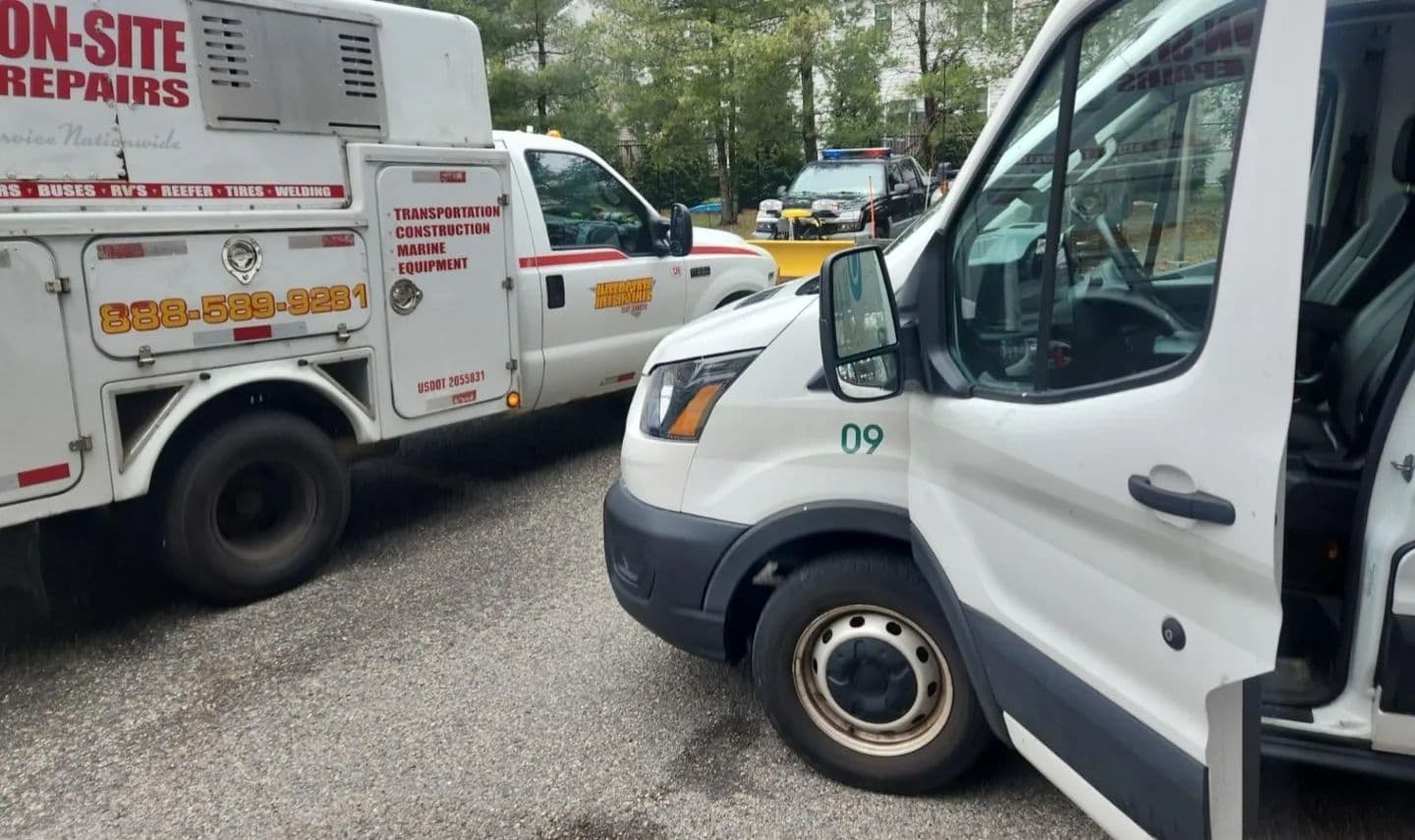
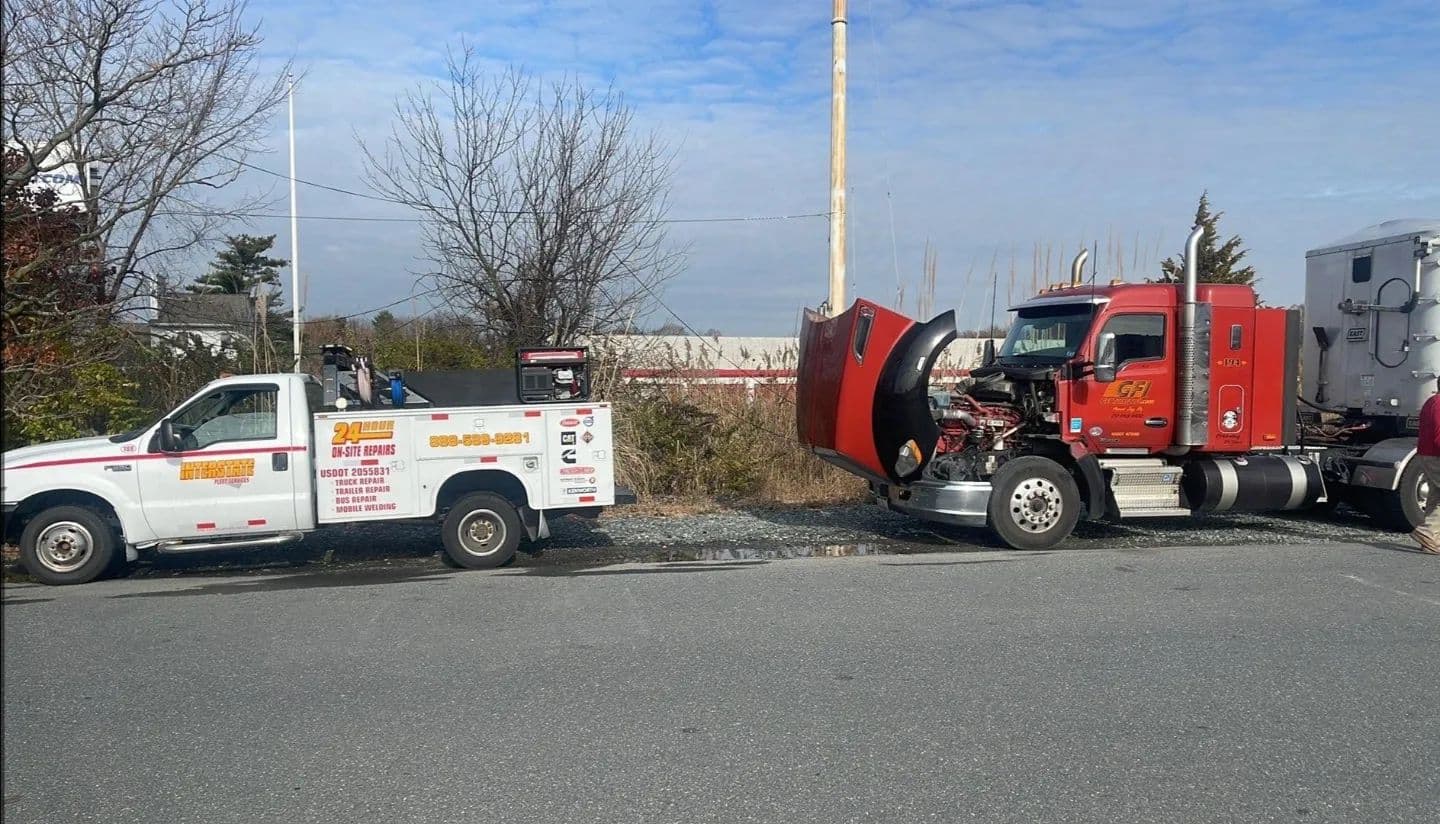
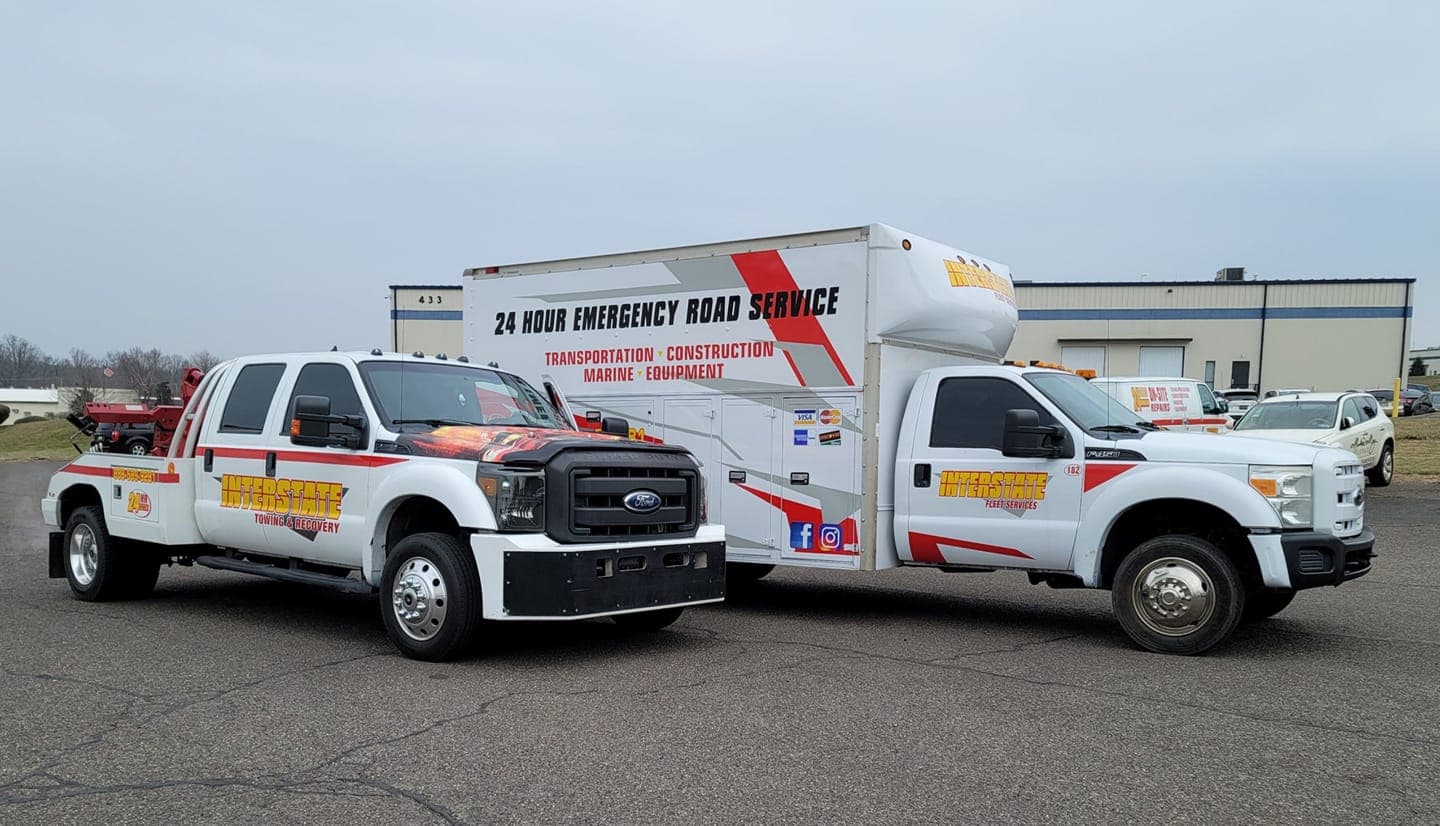
Our trucks. Our techs. In Baltimore.
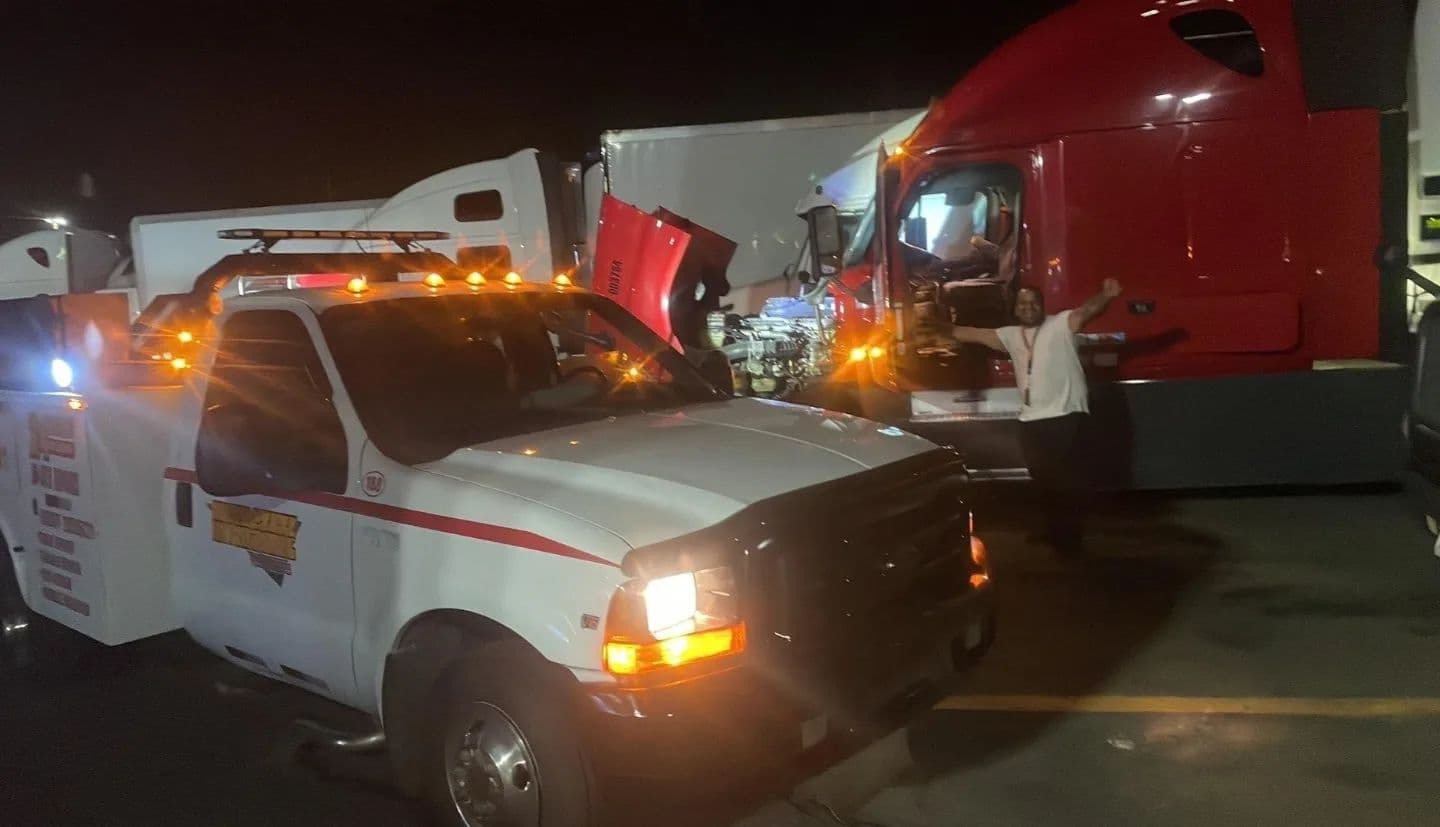
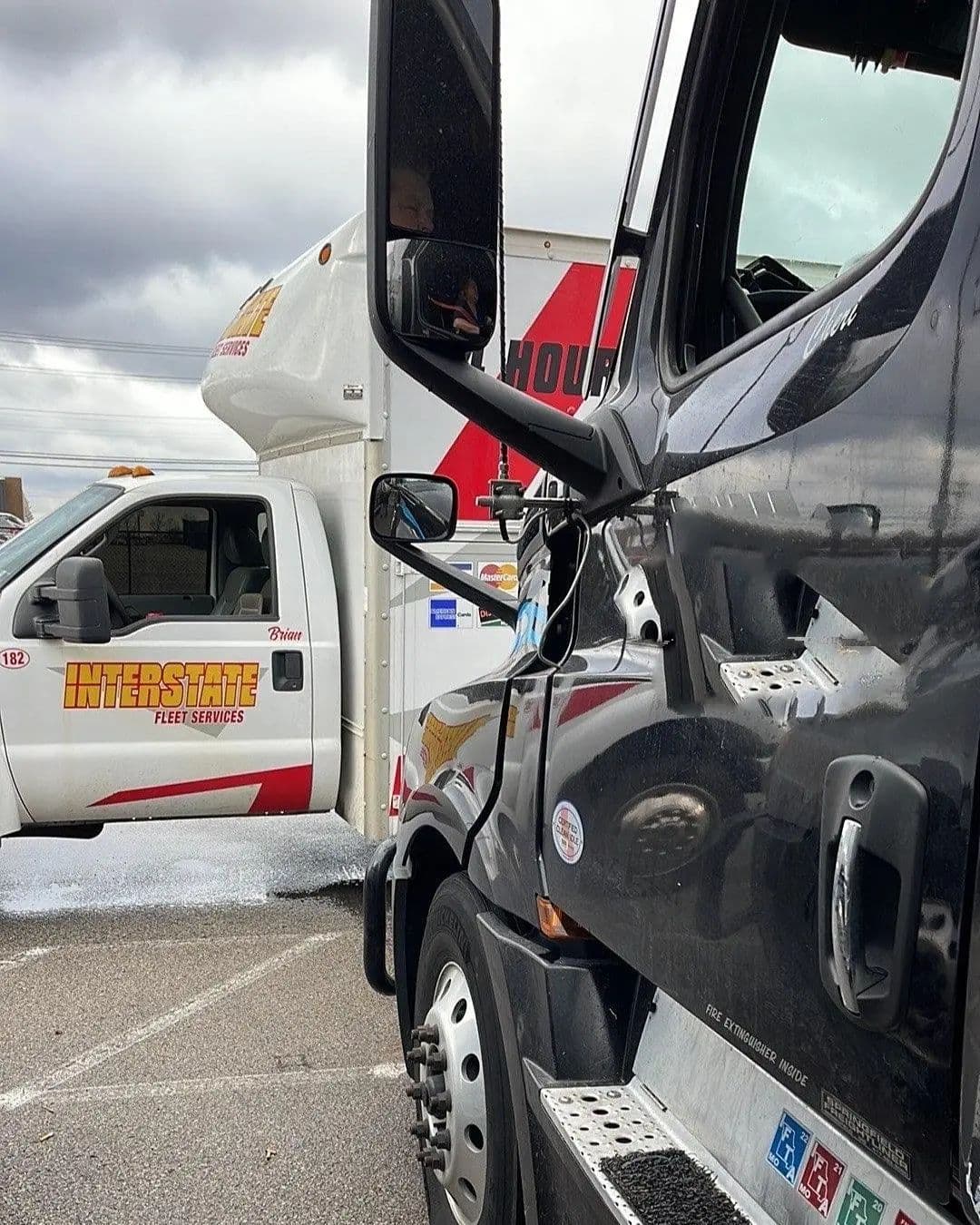
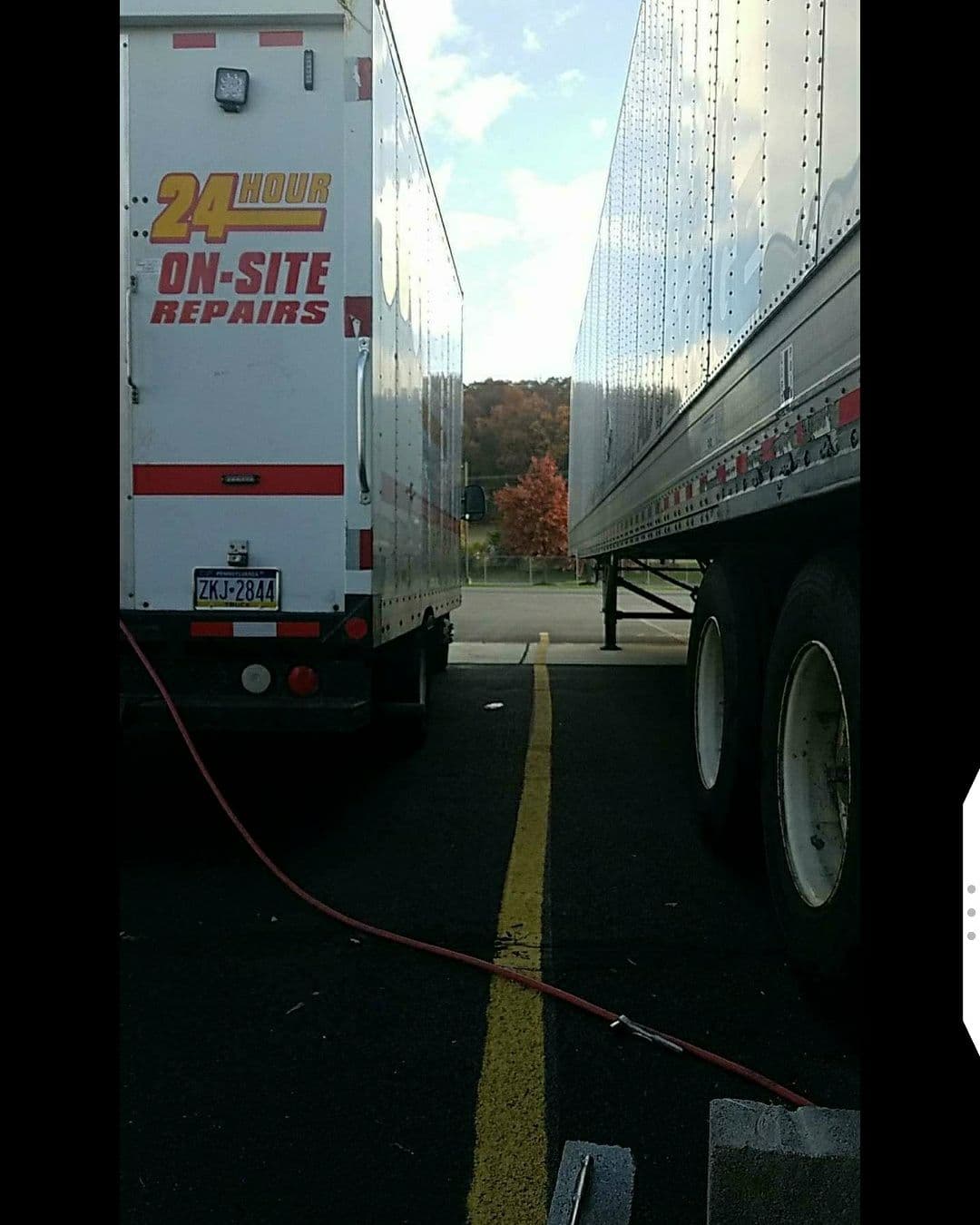
100% asset-based — real Interstate Fleet Services units and technicians rolling to your breakdown, not a referral hotline.
Down in Baltimore, MD? Call now.
Tell our dispatcher what the truck is doing and we'll get the nearest tech rolling — 24/7.
Can IFS reach a breakdown inside the Seagirt or Dundalk marine terminal in Baltimore?
Yes. The Port of Baltimore's Seagirt and Dundalk terminals are core to our Greater Baltimore coverage, and our technicians regularly work inside secured terminal gates. If your facility requires TWIC-style credentialing or a gate pass, tell our dispatch when you call so we can coordinate entry while the technician is en route. Call 1-888-589-9281 any time — we operate 24/7 and will route the closest available technician to your location.
How does IFS handle the Beltway detours since the Key Bridge collapse?
The loss of the Francis Scott Key Bridge on I-695 rerouted a great deal of truck traffic onto the western arc of the Beltway and through the Fort McHenry and Harbor tunnels, and our technicians know those current freight patterns well. We respond to breakdowns along the active I-695, I-95, and I-895 corridors and adjust routing to reach you around the congestion. Call 1-888-589-9281 any time — we operate 24/7 and will route the closest available technician to your location.
My car-hauler has an air or hydraulic fault at the Dundalk ro-ro lot — can IFS fix that on-site?
Yes. Baltimore is the nation's top roll-on/roll-off auto port, and car-hauler work is squarely in our wheelhouse — air brake faults, deck hydraulics, ramp and winch systems, and tire service on loaded auto-transport trailers. We come to the ro-ro staging lot and work the equipment where it sits rather than forcing a tow. Call 1-888-589-9281 any time — we operate 24/7 and will route the closest available technician to your location.
Does IFS service the distribution campuses at Tradepoint Atlantic and the Jessup corridor?
Absolutely. The Tradepoint Atlantic logistics campus on Sparrows Point and the warehouse belt along the Jessup and BWI corridor are regular response areas for us. Our mobile units work at loading docks, in staging yards, and on the industrial access roads that serve those parks. Call 1-888-589-9281 any time — we operate 24/7 and will route the closest available technician to your location.
Can IFS do scheduled preventive maintenance for Baltimore-area fleets, not just emergencies?
We do. Scheduled mobile PM service is available for fleets and drayage operators running out of Baltimore-area yards, terminals, and distribution centers — DOT inspections, oil and filter changes, brake work, and tire rotations performed at your location so trucks stay off the tow hook and on schedule. Call 1-888-589-9281 any time — we operate 24/7 and will route the closest available technician to your location.